Tuesday, May 6, 2014

HOW DO I KNOW WHEN MY ALTERNATOR OR BATTERY GOES BAD?


The Alternator

Here are some symptoms to look for that are grouped together. Of course there is a warning light that will be displayed once an alternator goes out; however, be in touch with your senses to find the problem before they get worse:

OLD               NEW


  • Use Your Eyes: Usually when our customers complain of an alternator issue it just takes a quick look to find a belt missing, hanging off the engine block or so loose it's flapping around the engine compartment. A quick visual check of the belt for cracking, excessive wear marks and other visual related problems can give you some idea of what may be the problem. Also, the drive belt must have the proper tension to run the alternator correctly; too much tension is just as bad as not enough. A quick check of the belt tension is usually enough to determine if a problem exists.

  • Use Your Ears: We also see our customers complain about hearing a "growling" or "whining" noise before an alternator gives out. The alternator is driven by either an accessory belt or a serpentine belt in conjunction with the crankshaft pulley. The alternator pulley typically spins about two or three times faster than the crankshaft pulley to produce the power necessary at lower engine speeds, such as at idle. If the pulley is not in correct alignment with the belt, if it's canted on the shaft or if the bearings and bushing are worn out, the growling or whining noise will let you know there's a problem.

  • Use Your Nose: The smell of burning rubber or hot alternator wires will often accompany alternator failure. A pulley that isn't in alignment or not turning freely will cause more friction on the belt, which creates heat and then the smell of burning rubber. The hot alternator wire scent can be caused by an overheated alternator, so keep your nose in tune with your vehicle.

The Battery 

While not technically an alternator problem, a car that won't start is a definitive notice from your car that there's a problem in the starting system. When the key is turned, you'll hear a tell-tale clicking of relays ticking over but nothing else happens. After a time, even that noise stops. The immediate problem is usually a dead battery; but the question a driver should ask is, "Why is it dead?"


When an alternator begins to fail, or fails outright, the car's battery begins to take up the slack rather than acting as a capacitor for the system by receiving a constant infusion of electrical power from the alternator. However, even the best car battery will run down eventually leaving a driver stranded in the driveway or worse, on the side of the road. Car batteries are not designed for long-term power use. They're average life is between 5-7 years and they are designed to provide the vehicle with enough electrical oomph to start by juicing the starter motor with a surge of power and getting the whole works spinning.
Diagnosing a dead battery versus a dead alternator is relatively easy. Simply jump-start the car and then remove the cables as quickly as possible. Then wait. If the alternator is failing to charge the system, the car will soon die again and the problem has been pinpointed. If the car runs and continues to run, then it's likely the problem is with the battery. Caution should be used, however, as a dying battery can only receive a charge for so long and may go completely dead at a later point despite the best efforts of the alternator. 
We can test your battery at Rick's Complete Automotive (707)887-2281 and see if your charging system is up to par.

Tuesday, October 15, 2013

Common Car Problems In Winter


The Infamous "Dead Battery"

  • The battery is the first part connected when first starting your vehicle. The battery must crank 100-200 amps in order to turn the starter against the flywheel and turn engine over. Your battery will produce up to twice or two-and-a-half times more cold cranking amps than is required to start the engine. The problem that still lies is, during extreme temperatures, the amperage capacity of the battery can be reduced to half its output. In addition, if the vehicle is parked outside in inclement weather, the flywheel and starter wheel can become frozen. A standard battery life is between five and seven years. Have your battery checked to see if it can handle the load your vehicle needs to withstand the winter season.


Fuel Condensation

  • Moisture can cause condensation to form in the fuel tank and fuel lines causing cars to not start in winter months.  A full tank of gas can produce one pint of condensation inside the fuel tank during the winter months. After a drive and the fuel pump stops pumping fuel into the motor, condensation can begin to form inside the fuel lines. After a long sit throughout the night you wake up to a near frozen car, when you go to turn your car over to start the condensation (water) reaches the throttle before the actual fuel does, resulting in the vehicle not being able to ignite the water and start. In addition, to trying to start the vehicle the starter will begin to heats up very quickly and continuously trying to turn a stubborn engine over could easily damage the starter.


Coolant and Oil
  • Coolant and oil are important no matter what time of year it is, but they won't have an effect on your vehicle starting or not, they are essential in extreme conditions. Thinner weight oil will help prevent coagulation of the oil properties which will help move the oil into the engine once started. Coolant on the other hand should be properly mixed--not too concentrate and not too lean--in order to ensure the correct temperature and pH balance have a Rick's Auto mechanic test it for you. Obviously there is a difference between a cold engine and a running engine, it doesn't take long for a cold engine to heat up. If the temperature of the antifreeze is not correct, you can crack your engine block.


Steps to Beat the Cold

  • As mentioned, having the car checked regularly at Rick's Complete Automotive in Forestville California will go a long way in preventing no-starts in winter. On extremely cold nights, you could place a battery charger onto your battery. The use of a trickle charger will prevent you from overcharging your battery, which isn't good either. A trickle charge will help keep the battery warm for the initial turnover when demand is called upon it. If your battery charger does not offer a trickle charge option, trade it in for one that does.

    Parking your car in a garage, away from the harsh wind and chilly weather conditions, will also help during extreme cold periods that wind-chills affect the temperature.

    Get your car checked to be ready for the winter season at Rick's Complete Automotive 6560 Railroad Ave. Forestville, CA 95436. (707)887-1641.

Tuesday, July 23, 2013

Brake Noise? Here Are The Top 4 Things To Look For

One of the most important safety features of ANY automobile is it's ability to stop. Our customers' place such a high value on their car's ability to slow and stop this is why we pay attention when they complain about the brake issues.
Let's review the four most common brake complaints and how to resolve them.

#1. Brake Noise

Hearing brake noise, or what sounds like finger nails on a chalk board, is the most obvious sounds for drivers today. Unwanted movement of brake components can also cause brake noise. So how do you fix it? Keep brake components in place per factory specifications and properly prepare surfaces during service.

Things to look for on braking components are things like binding, corrosion, lack of lubrication, and worn or damaged components, clean the caliper moving parts and retaining hardware. Clean pin bores with a round wire brush to make for a smooth operation. Doing so will ensure safe travel on the roadways.


#2. Pulsation

Do you feel a pulsation in your brake petal when you push it? If so this can mean your brake rotors are warping causing a vibration in your petal. Also do not forget to check the hubs.Hubs can be the culprit while the rotor shows the symptoms.

If your brake rotors check out fine and you still feel pulsation make sure the tire and wheel assemblies are all in balance. They can cause similar pulsation that you would feel by a rotor problem.

Below is an example of a warped rotor:


#3 Dust

Once you apply brake pressure to your brake rotors, small amounts of brake pad material starts to burn off of your brake pads. This material is known as brake dust. This material deposits throughout the braking system and in and around the surrounding wheel.

It's always a good rule of thumb to get your brake dust deposits blown out during a regular brake check of brake job at your local mechanic.

Here is an example of excessive brake dust:


#4. Excessive Brake Wear

We hear all types of brake complaints but it usually is a result of lack of maintenance. Brake wear on your vehicle will vary due to driving conditions but overall the brake pads will have more wear and failure from abuse like overloading your vehicle, making short, stop-and-go trips or even leaving one foot on the brake pedal while driving. 

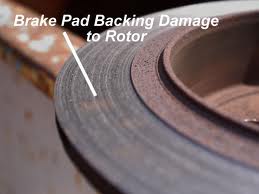
Here is an example of excessive brake wear where the brake pads worn down into the backing plate and then the car owner continued to drive making a metal to metal contact on the brake rotor (very unsafe).


Here at Rick's Auto we have brake front or rear jobs that range from $250-$300 depending on what kind of brake system you have. Make an appointment today to get a brake check making your family safe.

Rick's Complete Automotive
6560 Railroad Ave.
Forestville, CA 95436
707.887.1641
ricktacla@gmail.com


Tuesday, April 30, 2013

Running Problems? Check the Big Three!


If you find yourself unable to start your engine it could be missing one of the three major components needed for an engine to run compression, fuel and spark, without ANY one of these items NOT working the engine will NOT run leaving you calling the tow truck on the side of the road.
#1. Compression - This area of the motor results by crankshaft rotation and pistons moving up and down inside the engine block. Once the pistons reaches the top of the cylinder with fuel and spark inside the compression allows the explosion to occur returning the piston to the bottom of the cylinder wall pushing your vehicle forward. If the timing belt or timing chain fails it will cause the camshaft to become out of correlation with the crankshaft or allow the camshaft to stop rotating correctly. Either of these conditions will cause the engine to lose compression and sometimes cause internal engine damage.


#2. Fuel - Fuel delivery is what feeds your motor and if it doesn't eat it will die! The fuel system is made up of these major component parts: fuel pump, fuel injectors, pressure regulator, fuel filter and fuel pressure lines. This system is used to supply fuel under pressure to the fuel injection system and/or carburetor, the lack of fuel pressure or volume will cause the fuel delivery system to fail and the engine to stall or not start.


#3. Spark - Without spark to ignite the fuel you will not create the explosion inside the cylinder needed to drive you forward. The ignition components include: spark plugs, spark plug wires, distributor (if applicable), crankshaft angle sensor, camshaft angle sensor, ignition coil, ignition module, knock sensor and PCM (powertrain control module). The engine relies on the ignition spark to be delivered to the combustion camber at the correct time. If the ignition spark stops or is delivered at the wrong time the engine will not run or run poorly.


If your vehicle is running poor or not starting make an appointment today.
Rick's Complete Automotive
6560 Railroad Ave.
Forestville C.A. 95436
(707)887-1641 

Monday, March 18, 2013

How Do You Know When You Have a Blown Head Gasket?


A blown head gasket can be very bad news. It’s very expensive to fix and in this article we will provide symptoms so you can keep an eye out on your vehicle. The above picture displays how coolant has made it's way into an engine's cylinders resulting from a blown head gasket.


Overheating


The biggest cause of a blown head gasket is overheating. Before replacing the gasket, it’s vital that you find the cause of the overheating problem. It could be due to coolant leaks in the engine, the hoses, the radiator or the water pump. These have to be found and repaired. It could also be due to the cooling fan not working or the radiator being clogged. Again, these need to be fixed or, you’ll end up with another blown head gasket again shortly after your repair leaving you on the side of the road.


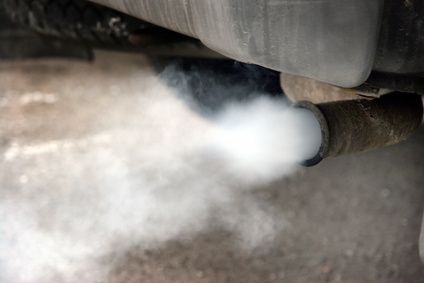
IF YOUR EXHAUST SHOOTS WHITE SMOKE OUT IT COULD BE A BLOWN HEAD GASKET


Installation Error


If you have had a blown head gasket replaced on your vehicle and you solved the problem of why it blew in the first place, the likely cause this time will be installation error. This is not particularly uncommon. When head gaskets are installed the head bolts need to be tightened in the correct sequence and set to the proper torque. They also need to have clean threads and are not stretched or damage during installation. The cylinder head surfaces and engine block also need to be smooth, clean and flat. Any one of these factors can cause a blown head gasket. 


Hot Spots


There are engines that are prone to hot spots between the center cylinders in the cylinder head, although aftermarket head gaskets for these engines are reinforced to lessen the possibility of a blown head gasket.
However, if you have an older car, the hot spot could be the cause especially if your old head gasket has been replaced by the aftermarket one that’s not reinforced.


Pre-ignition Problems


Pre-ignition problems can cause a blown head gasket, especially if you only use your car for city driving. With pre-ignition, there’s a hot spot in the chamber which causes ignition of the fuel before the spark plug has a chance to fire. It could also be due to detonation. This happens if the spark timing is too advanced or the fuel mixture is not rich enough. It causes carbon deposits to build up and ultimately erodes and blows the head gasket.


Bad Head Gasket


In some cases, the original head gasket for the car can just be very badly designed and the poor design can cause a blown head gasket over a period of time. A little research will establish if your vehicle is prone to poor designs, once you replace it t with a good head gasket, you should not experience any further failures.


HERE IS A VIDEO OF A PRESSURE TEST SHOWING A BLOWN HEAD GASKET


Rick's Complete Automotive
6560 Railroad Ave. 
Forestville CA 95436
(707)887-1641


Monday, February 4, 2013

How Do You Know If Your Thermostat Is Going Bad?

What is a Thermostat?


There are a few ways to tell if a thermostat is going bad. The thermostat keeps your vehicle running at it's proper temperature, so keep an eye on the temperature gauge of your vehicle and if it starts moving up on the hot side and then kicks back down to a normal state, it should be functioning correctly. You want to make sure that your vehicle temperature climbs to a high temperature and then decreases.

If the thermostat does not start decreasing until and it reaches a danger zone, then the thermostat may be faulty and need to be replaced. The reason for this is because at a certain heat (which will vary for each car) the thermostat should open, causing the engine to cool down. However, the thermostat is a safety mechanism and should not allow your vehicle to reach a dangerous level which can cause the engine to overheat and damage the mechanisms of the engine or much more problems can occur.


How do I know if my thermostat is functioning correctly?

One way to test whether your thermostat is functioning properly is to turn your ignition off and wait for the engine to cool down. Once cooled, start the engine and open the hood. There will be two radiator hoses (see image below), as you leave the engine running one hose should stay cool, while the other warms up. The cool radiator hose should only change temperature once the thermostat has opened. If this is not the case then it sounds like you may have a faulty thermostat that needs to be replaced.


How do I know when to replace my thermostat?

A thermostat replacement isn't as big of a deal as you might think, as the price of thermostats are not that expensive to replace compared to many other parts on your engine. It would be a good idea to get it replaced as soon as possible if you realize it is faulty and fails the above test. Remember, a bad thermostat could cause more damage to the vehicle and end up costing you more money in the long-run the longer you leave your temperature of your motor at a dangerously high level.

Make an appointment today with Rick's Complete Automotive (707)887-1641. We will evaluate your cooling system and make sure your motor is running at it's proper temperature level.


Rick's Complete Automotive
6560 Railroad Ave.
Forestville, CA 95436
(707) 887-1641  

Monday, January 28, 2013

Why Do I Need My Headlights Restored?


Headlight Restoration


Polycarbonate plastic is found on most headlight assemblies on all major vehicles. This material even though it is generally durable, this porous material makes it open to environmental defect. Instead of replacing your headlight assembly completely headlight restoration services like the one offered at Rick's Complete Automotive may become an alternative to saving you money!

Vision and safety regulations allow for every vehicle to have the most effective light vision available in today's technology but with a headlight surface not allowing your expensive LED headlights to shine through it's lens by design this may leave you prone to an accident. Not being able to see what's in front of you with bad conditions such as rain, snow, or fog can really mean the factor of keeping you on the road or not. This leaves it up to the responsibility of every vehicle owner to schedule regular appointments with a specialist at Rick's Complete Automotive.

Who said to have to do anything or even replace a hazy headlight? Generally as new headlight assembly can run you anywhere from one-hundred and fifty dollars to two-hundred and fifty dollars, but we can restore your original headlights for twenty-five dollars.  As long as your vehicle's headlights can still be restored, a specialist here at Rick's Complete Automotive Services can do the job and save you money at the same time.


NEVER DRIVE BLIND, ESPECIALLY AT NIGHT.
PUT YOUR SAFETY FIRST, ALL OF THE TIME

Schedule an appointment today at Rick's Complete Automotive located at 6560 Railroad Ave. Forestville, CA 95436. (707)887-1641.